Buying guide
Homeschool Math and Literacy Materials, Compared
Hands-on materials are the part of a homeschool day that most rewards buying carefully. They get used daily, they last for years, and the difference between a set that works and one that sits in a cupboard is usually not price.
Every item below is scored the same way as everything else on this site, and every one of them involves the same trade-off: the features that make a manipulative useful — small, numerous, easy to group — are the features that make it a choking hazard for a younger child. We state that plainly on each review rather than burying it.
How to read the scores here
Our safety scores for this category sit lower than for baby toys, and that is deliberate rather than a criticism of the products. A hundred loose cubes cannot score the way a single molded rattle does. The score reflects what the item is; the age label tells you who it is for.
None of these carry a certification claim we were able to verify, so their certification factor is recorded as not found. That is an absence of evidence available to us, not evidence of a problem.
Counting and number sense
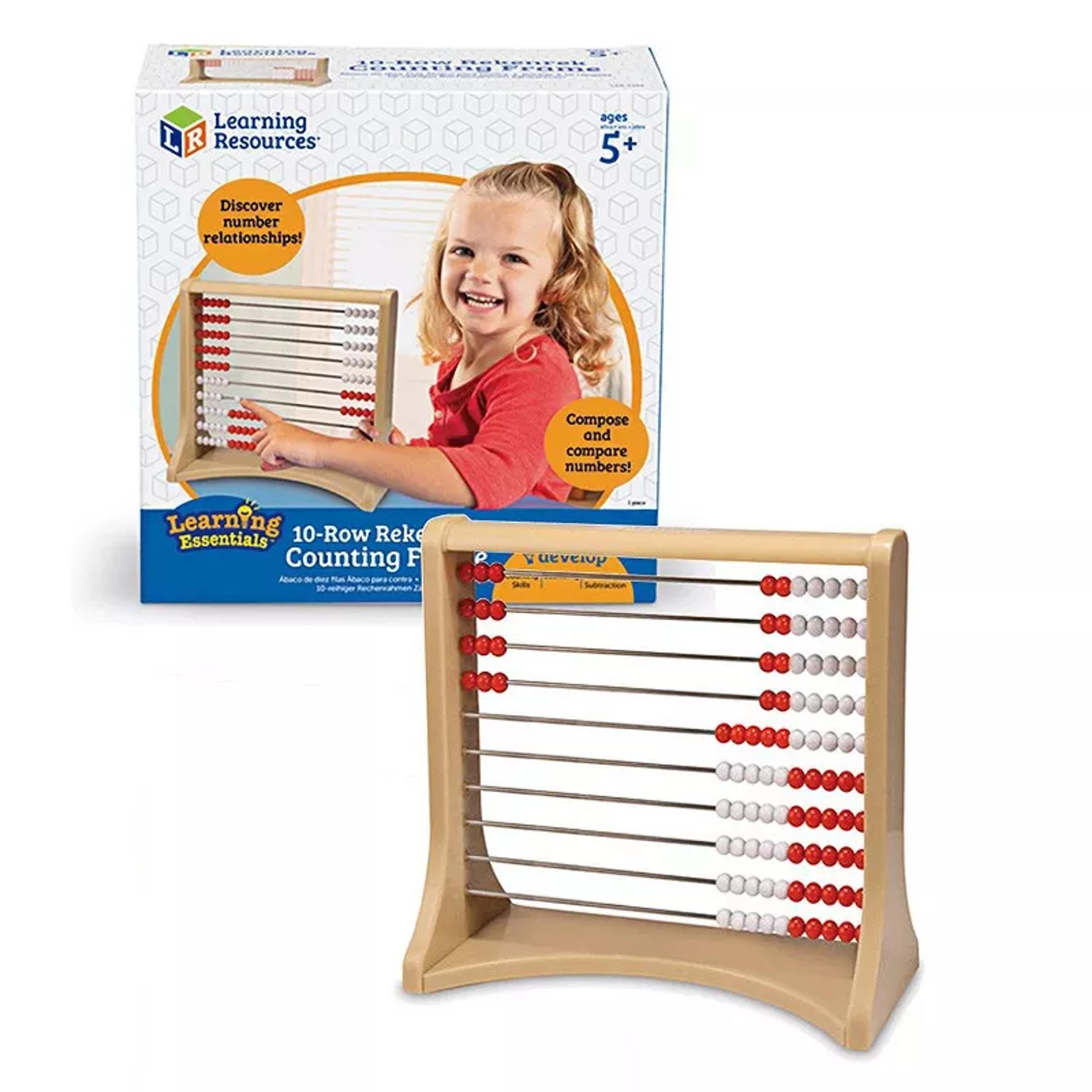
A counting frame makes five and ten visible rather than abstract, which is the jump most early math programs are trying to produce. Beads on fixed wires also means fewer loose pieces than most alternatives, which matters in a mixed-age house.
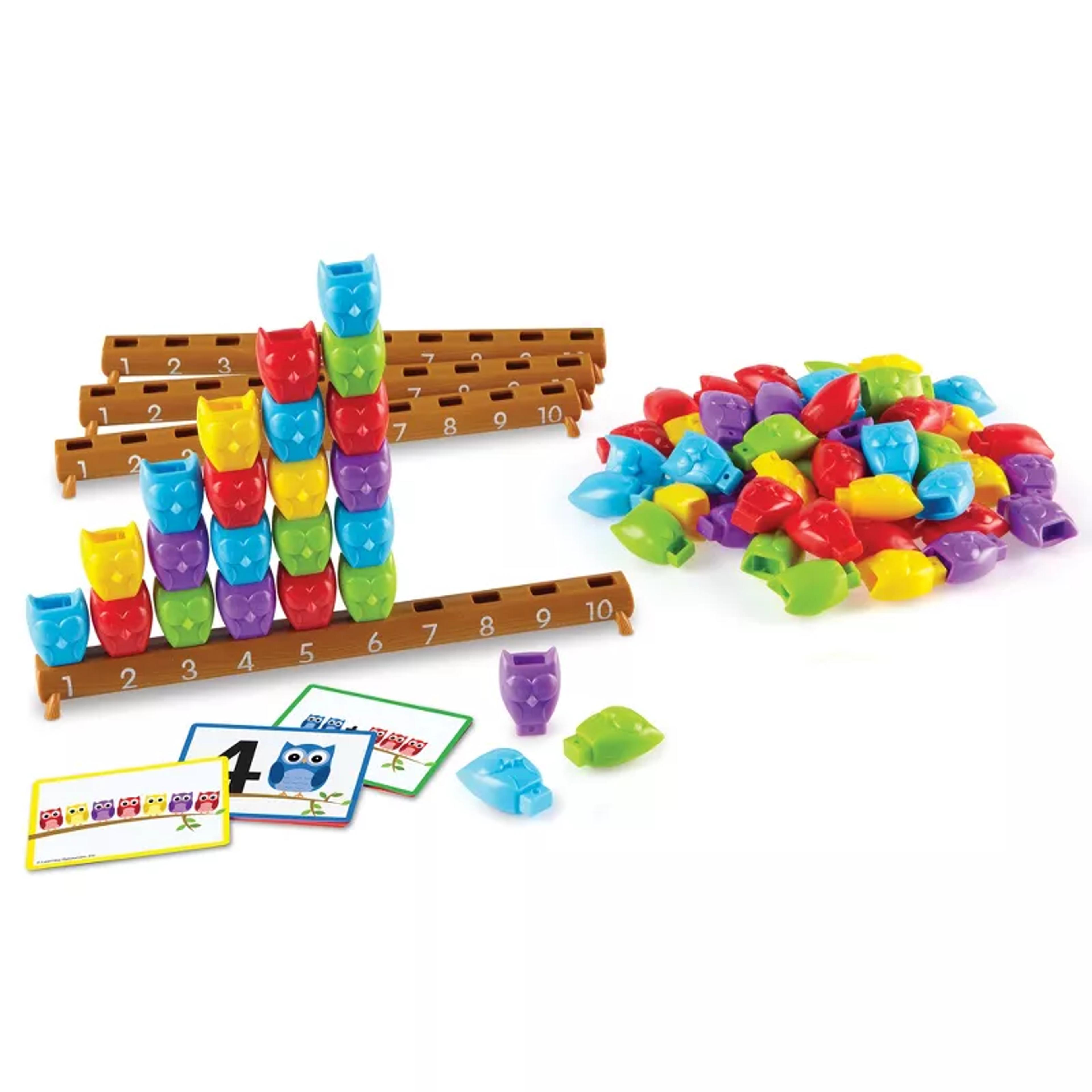
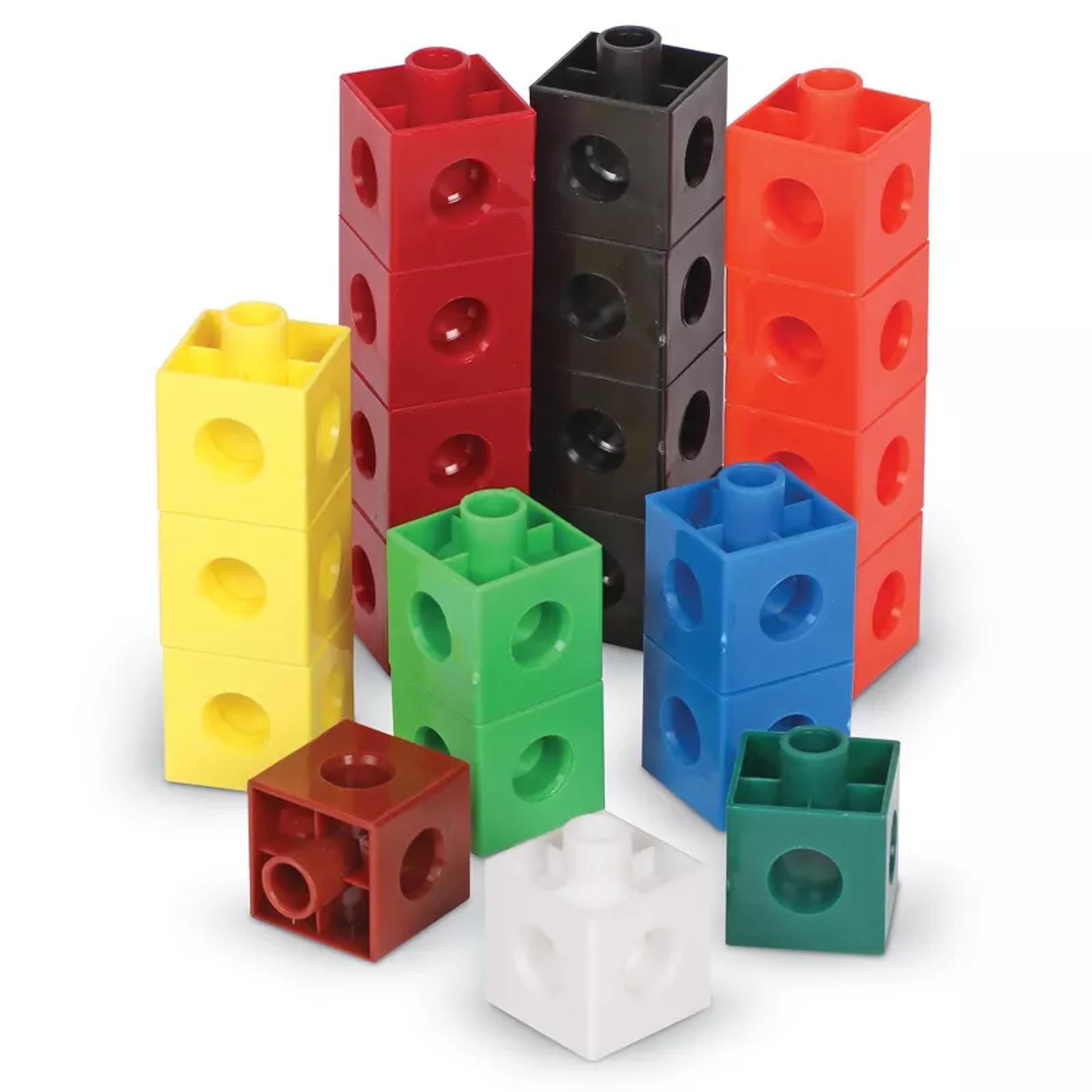
Loose counters — cubes, owls, penguins — do something a frame cannot: they can be grouped, moved and physically rearranged. That is genuinely more useful for teaching grouping and early multiplication, and it is also where the small-parts risk concentrates.
Shape, pattern and geometry
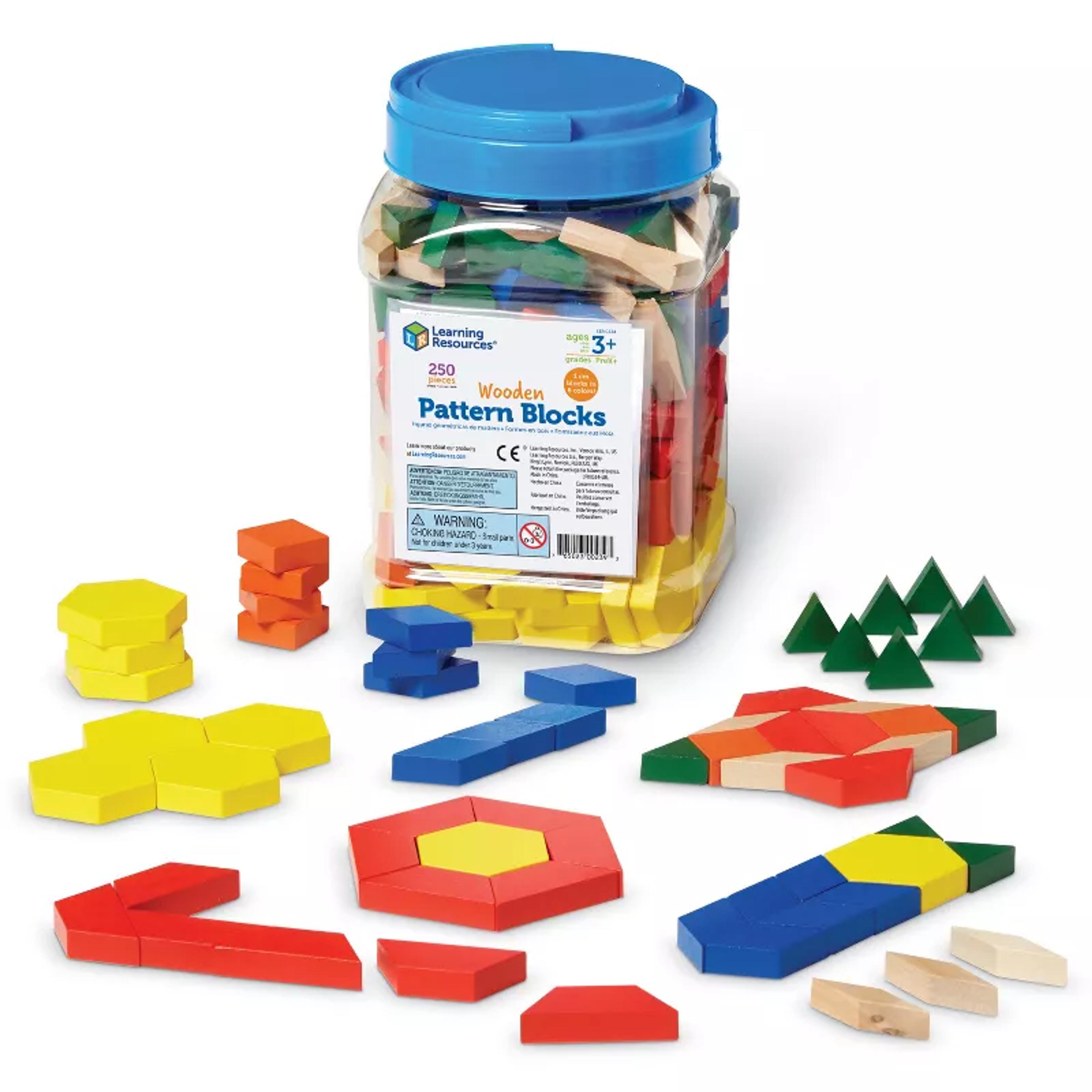
Pattern blocks are the most open-ended thing in this list. The same 250 pieces cover symmetry at four and fractions at eight, which is unusual value across a homeschool span. They are also flat, small and numerous — the set we are most careful about with a toddler in the house.